A tankless water heater (also called an on-demand or instantaneous unit) heats water only when a tap is open, so it has no big tank sitting hot around the clock. That removes the standing heat loss of a storage tank, which is the main reason it can use less energy. It does not make hot water free, and it does not suit every house.
This guide covers how the technology works, the efficiency numbers worth trusting, how to size a unit so the shower does not go cold when the dishwasher starts, and the situations where a tankless unit is a poor match. If you are weighing it against a standard tank or a heat pump model, the decision rules near the end will narrow it down quickly.
- Tankless units skip standby heat loss, which makes them 24%-34% more efficient than a storage tank for low-use homes but only 8%-14% for high-use homes. [1]
- ENERGY STAR estimates certified gas tankless units save a family of four $95 per year over a standard gas tank. [2]
- Size by peak simultaneous flow and temperature rise, not by household headcount.
- Gas lines, venting and electrical service upgrades are licensed-professional jobs.
- Tankless units can last more than 20 years, but only with regular flushing in hard-water areas. [1]
How a tankless water heater works
When you open a hot tap, flow through the unit triggers a heat source. In a gas model that is a burner and heat exchanger. In an electric model it is a set of heating elements. Either way the water is heated as it passes through and leaves at the temperature you set. Close the tap and the heating stops.
The key limit is how much water the unit can heat at once. A tank stores a reserve, so it can feed several fixtures until the reserve runs low. A tankless unit has no reserve. Its capacity is a flow rate (gallons per minute) at a given temperature rise, meaning how many degrees it must add to the incoming cold water. Colder incoming water means a bigger rise and a lower usable flow.
What savings to expect
DOE’s Energy Saver guide says that for homes using 41 gallons or less of hot water a day, on-demand water heaters can be 24%-34% more energy efficient than conventional storage tank water heaters. For homes that use a lot of hot water, around 86 gallons a day, the range drops to 8%-14%. [1]
Read that as a sliding scale: the less hot water you use, the more the lack of standby loss matters. A large household running many showers and loads of laundry gets a much smaller percentage benefit because most of its energy goes into heating the water itself, which a tankless unit must do too.
ENERGY STAR puts a dollar figure on the gas version: certified tankless water heaters save a family of four $95 per year, or $1,800 over their lifetime, compared with a standard gas storage model. Against a conventional (non-certified) gas tankless unit, the certified one saves about $20 annually, or $300 over its lifetime. [2]
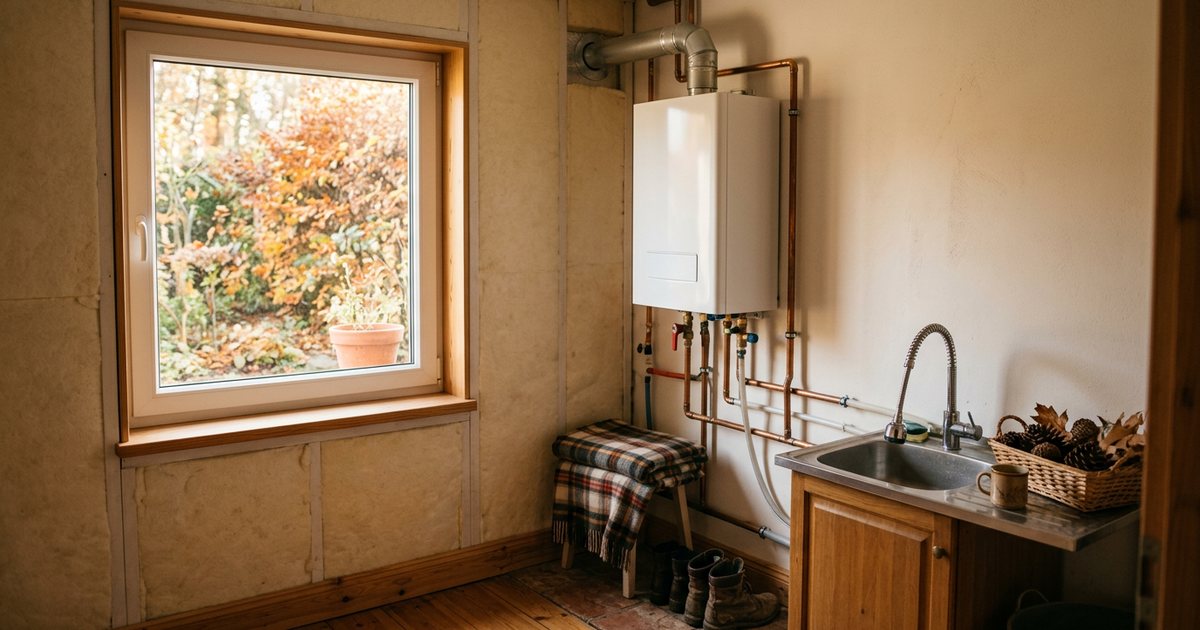
Those figures are for gas models. DOE notes that electric tank and electric tankless water heaters are not ENERGY STAR eligible because they are already highly efficient and have little room for improvement. [1] A 2012 DOE Building America report estimated that, at best, an electric tankless unit could save about 12% in energy costs over an electric tank. That report is old, so treat it as an upper bound rather than a forecast. [3]
Gas versus electric tankless
Gas tankless units generally deliver higher flow rates than electric ones, which is why they are common in whole-house installs. They also need a gas supply line sized for a much bigger burner than a tank uses, plus venting that suits the unit. Gas lines and venting are licensed-professional work, and a mistake can cause carbon monoxide or gas leaks. Do not attempt either yourself, and keep working carbon monoxide alarms on every level.
Electric tankless units have no flue, but they pull a lot of current. The 2012 DOE guide notes that most electric tankless units require 50-200 amps. [3] Many older homes cannot supply that without a panel or service upgrade, which can erase any savings. An electrician has to size the circuit and do the wiring. This is not a weekend project.
Sizing: the step most buyers skip
The DOE guideline is blunt about sizing: the maximum demand at any given time, as well as the temperature rise that will be needed, must be used to size the unit. [3] A unit that is too small is a common cause of disappointment.
Work through it in three steps:
A benchmark for rated flow
ENERGY STAR requires certified gas tankless models to deliver a max flow of at least 2.8 gpm over a 67° rise, and a UEF of at least 0.95. [4] That is a floor for a certified unit, not a promise your house will be comfortable. Many homes simply need more than one unit: DOE says you may find you need two or more tankless water heaters to keep up with demand. [1]
- List the fixtures you might run at the same moment (two showers, a dishwasher, a washing machine) and note each one’s flow in gallons per minute from its label or manual.
- Add them up for your realistic worst case. That is your peak flow.
- Estimate your temperature rise: the temperature you want at the tap minus your winter incoming water temperature. Then check the manufacturer’s flow chart for that rise and compare.
Lifespan and maintenance
DOE says most storage water heaters last 10-15 years, while tankless water heaters can last more than 20 years. [1] ENERGY STAR gives tankless units a life expectancy of 20 years. [2] The long life is a real advantage, and it is part of how the higher purchase price can pay back.
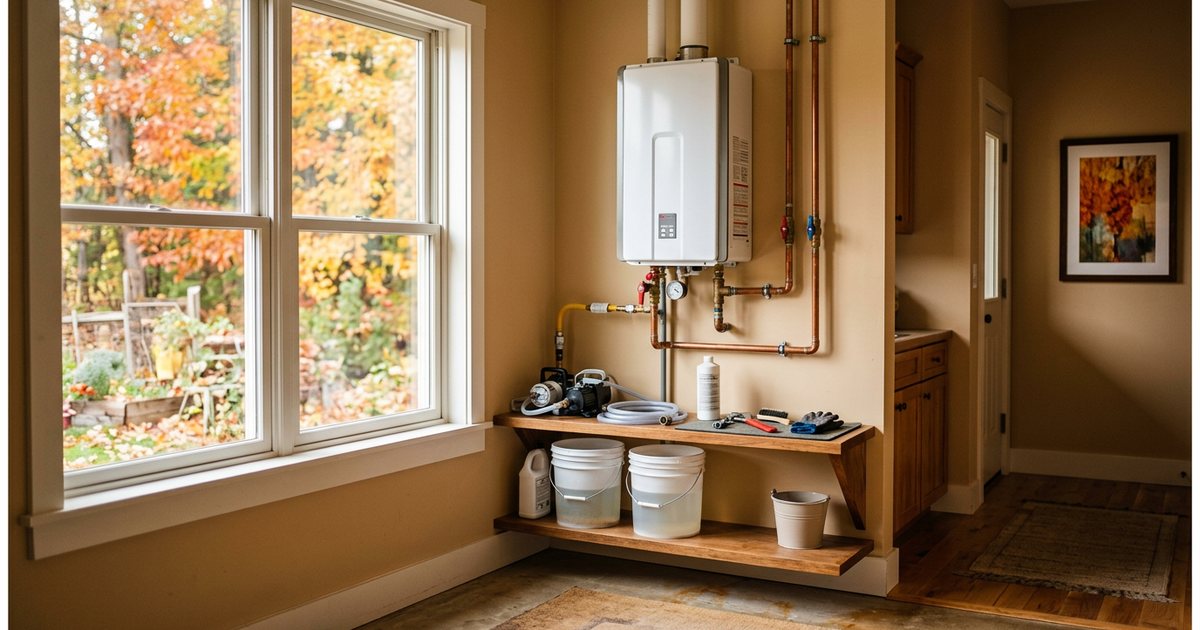
Longevity depends on upkeep. Hard water leaves scale inside the heat exchanger, and a unit that is never flushed will lose efficiency and eventually fail early. Follow the manufacturer’s flushing schedule, and ask a plumber about a water softener if your water is hard.
Who should buy one, and who should not
A tankless unit tends to make sense when the house is already on natural gas, the gas line and venting can be upgraded at reasonable cost, hot water use is modest to moderate, and you are replacing a failed tank anyway. It also fits when floor space is tight, because the unit mounts on a wall.
It is a weak choice when you would need a major electrical service upgrade, when many fixtures routinely run at once and a single unit would have to be oversized, or when hot water use is very high and the percentage savings shrink. In an all-electric home, a heat pump model usually gets better efficiency than an electric tankless unit, which is covered in the heat pump comparison.
Be wary of one more mismatch. Tankless units deliver hot water fast once they fire, but the pipe run between the unit and a far bathroom still has to fill with hot water, so a long run feels no quicker than before.
FAQ
Do tankless water heaters really save money?
They usually use less energy than a storage tank, with the largest percentage gains in low-use homes: DOE cites 24%-34% for homes using 41 gallons or less a day and 8%-14% at around 86 gallons. [1] Whether that covers the higher purchase and installation cost depends on your usage and local fuel prices.
Can I run two showers and a dishwasher on one unit?
Only if the unit is sized for that peak flow at your winter temperature rise. DOE notes you may need two or more tankless units to keep up with simultaneous demand. [1]
How long does a tankless water heater last?
DOE says tankless units can last more than 20 years, versus 10-15 years for most storage models. [1] Flushing out scale on schedule is what protects that lifespan.
Is an electric tankless water heater worth it?
The electrical load is the catch, since most electric tankless units require 50-200 amps. [3] Get an electrician’s opinion on your panel before you price the unit itself.
Is a tankless water heater ENERGY STAR certified?
Gas tankless models can be. Electric tankless and electric storage models are not eligible categories because they are already highly efficient. [1]
Gas piping, combustion air and venting must be designed and installed by a licensed professional, and electric tankless units need an electrician’s load calculation. Install carbon monoxide alarms and never block combustion air to a gas appliance.
Sources
- Tips on Saving Money and Energy in Your Home (Energy Saver Guide, 2022). U.S. Department of Energy, accessed 2026-10-12
- Save More with ENERGY STAR Gas Tankless Water Heaters | ENERGY STAR. U.S. EPA ENERGY STAR, accessed 2026-10-12
- Measure Guideline: Transitioning to a Tankless Water Heater (Building America, Sept 2012). U.S. DOE Building America (IBACOS), accessed 2026-10-12
- Water Heater Key Product Criteria | ENERGY STAR. U.S. EPA ENERGY STAR, accessed 2026-10-12
Savings, costs and rebate figures are estimates from the dated sources cited on each page; your results depend on your home, climate and utility rates, and incentive programs change often. Gas, venting and electrical work belongs with a licensed professional. This is general information, not financial, tax or legal advice. As an Amazon Associate we earn from qualifying purchases.