A door draft stopper is anything that blocks the gap under a door. The main choices fall into four product types: a loose fabric snake you lay on the floor, a twin draft guard that slides onto the bottom of the door, an adhesive sweep stuck to the door face, and a screw-on sweep that fastens to it. Which one is best depends on three things: the size of the gap, the floor surface, and whether you rent.
This comparison sticks to product-type characteristics and published guidance, not brand rankings. A building-science factsheet gives two useful rules of thumb: it sets a limit of less than 1/4 inch between the door bottom and the threshold for a door sweep, and it says automatic or bristle sweeps are preferable to rubber or plastic ones [1]. Everything below builds on that.
- Use the gap size to pick the type: the factsheet’s sweep limit is less than 1/4 inch between door bottom and threshold [1].
- Renters can use a twin guard or snake; where you can fasten a sweep, the factsheet prefers bristle or automatic over rubber or plastic [1].
- Avoid vinyl sweeps where rodents are a risk [1].
- A stopper only handles the bottom gap; the sides and top need weather stripping.
- Never block a vent or combustion-air opening, and keep exhaust fans working.
Start with the gap, not the product
Slide a ruler into the gap under the closed door. For a light check, turn off the room lights and have a helper outside shine a flashlight along the door edges: if you can see light shining in, weather stripping is needed [2]. The gap size is the first thing to settle when choosing a product type.
A small, even gap suits almost any sweep. A gap beyond the guide’s 1/4 inch limit, for example where the floor slopes or a threshold has worn, is better handled by a door shoe, a threshold replacement or adjusting the door. A loose snake can cover a big gap, but it seals less reliably because it only works while it stays pressed against the closed door and has not slid away.
Type 1: Under-door draft snakes
A fabric tube filled with sand, rice or foam beads that rests on the floor against the door. It needs no tools, works on any door, comes off in seconds and suits renters. The limits are real: it moves when the door opens, so someone has to put it back every time, and it only blocks air on the side where it sits.
Best for: rental units, rooms you rarely enter, guest-room doors, and as a temporary measure while you decide on a permanent fix.
Type 2: Twin draft guards
A twin guard is two foam or fabric cushions joined by a slot, so one sits on each side of the door bottom and it travels with the door. Because it stays attached, you do not have to reposition it, and it blocks air from both faces.
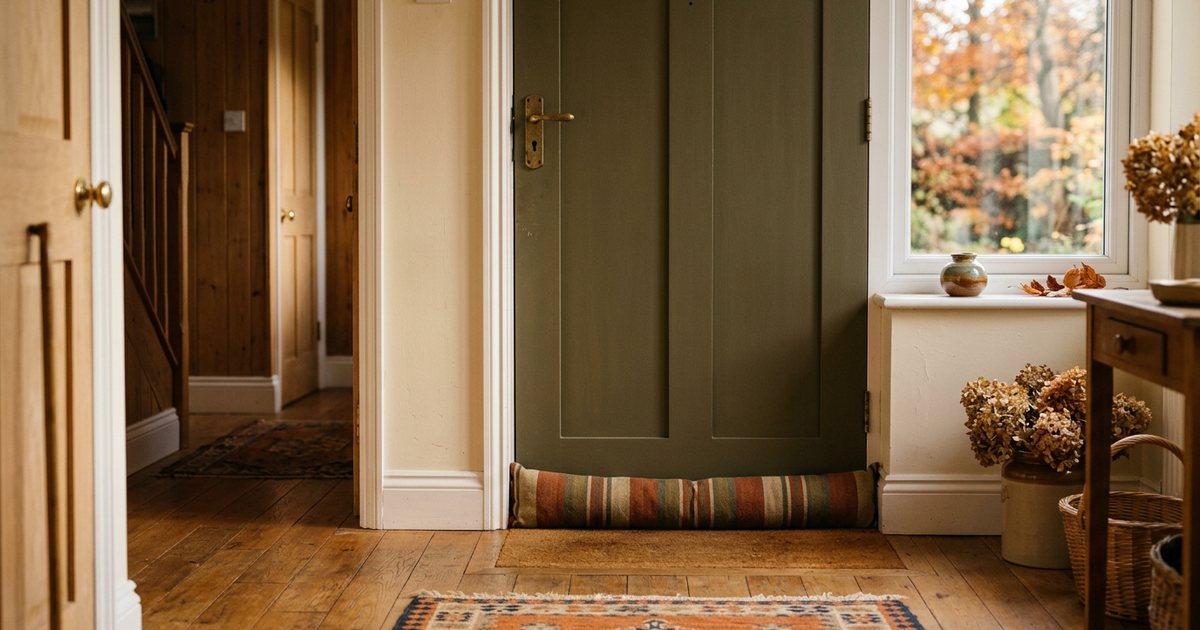
The trade-off is that it drags on thick carpet, and the width must be adjusted to your door thickness.
It is a good renter option for interior-facing exterior doors and for rooms where the door gets used daily but you cannot drill. Check that the slot is the right size for your door before you buy, since a loose guard falls off and a tight one scrapes the floor.
Type 3: Adhesive and screw-on sweeps
A sweep mounts to the door face and its flexible edge brushes the floor. Guidance says door sweeps, thresholds and door shoes are good ways to seal gaps under exterior doors [2]. Of the materials, automatic and bristle sweeps are preferable to rubber or plastic sweeps, and the sweep should brush the floor without holding the door open [1].
Adhesive-backed versions suit hollow-core interior doors and renters who accept peel marks; screw-on versions hold longer on solid exterior doors. In areas with rodents, do not use vinyl sweeps; a metal kick plate 12 inches tall is the guidance there [1].
Side-by-side decision table in words
Notice that cost is not the first filter. A stopper that you must reposition or replace every month costs more in effort than a sturdier one that you install once.
- Renter, interior door, tiny budget: fabric snake, or a twin guard if you want it to stay put.
- Renter, exterior door, bare floor: twin guard or adhesive bristle sweep.
- Owner, exterior door, even gap: screw-on bristle or automatic sweep.
- Owner, uneven gap or worn threshold: door shoe or a threshold replacement, then add a sweep if needed.
- Any door with rodent risk: avoid vinyl and add a metal kick plate [1].
- Door used all day by many people: pick the most durable sweep you can fasten with screws, not a loose item.
Fitting and upkeep for each type
Whatever you choose, the fit decides the result. Measure the width of the door before buying, because most sweeps and guards are cut to length and a short piece leaves a gap at the end that air finds immediately. Measure the thickness of the door too if you are buying a twin guard.
For an adhesive sweep, clean the bottom of the door with alcohol, let it dry, and press the strip along its whole length for a full minute. The building-science factsheet on weatherstripping advises applying products to clean, dry surfaces at temperatures above 20°F [1]. For a screw-on sweep, close the door, set the sweep so its edge just touches the floor, mark the holes, and fasten through the slots so you can lower it later as it wears.
Check any stopper at the start of each heating season. Bristle edges flatten, rubber hardens, and fabric snakes collect dust and slump. Replacing a worn sweep is usually a quick job.
What to check on the packaging
Judge any product on its published specifications rather than its marketing copy. Look for the gap range it claims to cover, the door thickness range it fits, the material of the sealing edge, and whether it can be trimmed to your door width.
Be skeptical of savings claims. Manufacturer claims should be treated as claims, not guarantees.
DOE says sealing uncontrolled air leaks can save 10%-20% on heating and cooling bills [3], but that figure covers the whole house. A single door stopper is one small part of it, and a stopper alone will not close the jamb gaps on the sides and top, where weather stripping does the work.
Limits, moisture and combustion safety
A stopper cannot fix a door that does not close squarely or a threshold that has rotted. If light shows at the bottom even with a sweep installed, the threshold or door may need adjusting.
Tighter doors reduce incidental fresh air. Without proper ventilation, excessive water vapor and harmful combustible gases can accumulate in the home [4]. Keep bath and kitchen exhaust fans working, and never block combustion-air openings or vents with a stopper.
FAQ
Do door draft stoppers actually work?
They reduce airflow under a door, and a mounted sweep that brushes the floor works better than a loose snake. Sweeps, thresholds and door shoes are recognized ways to seal the gap under an exterior door [2].
Is a draft snake or a twin guard better?
A twin guard stays on the door and blocks both faces, so it needs no repositioning. A snake is cheaper and simpler but gets pushed aside whenever the door opens.
What gap can a sweep cover?
A building-science guide gives a limit of less than 1/4 inch between the door bottom and the threshold for a door sweep [1]. A bigger gap is a sign to look at a door shoe, the threshold or the door itself.
Will a draft stopper damage my floor?
Hard rubber edges can leave marks and drag on thick carpet. Pick a softer bristle edge for delicate floors and check the clearance before fastening.
Do not use a draft stopper to block any vent, combustion-air opening or exhaust path, and do not rely on one near a gas appliance. Keep carbon monoxide alarms working, and have a licensed professional check combustion appliances if you make many sealing changes.
Sources
- Air Sealing Doors Adjacent to Unconditioned Space (weatherstripping types, door sweeps). Building America Solution Center (PNNL, U.S. DOE), accessed 2026-10-12
- ENERGY SERIES: What about Caulking and Weather-Stripping? (BSE-304NP). Virginia Cooperative Extension (Virginia Tech), accessed 2026-10-12
- Tips on Saving Money and Energy in Your Home (Energy Saver Guide 2022). U.S. Department of Energy (Energy Saver), accessed 2026-10-12
- Consumer Guide to Air Sealing the Home (DOE/EE-2470). U.S. Department of Energy (Energy Saver), accessed 2026-10-12
Savings, costs and rebate figures are estimates from the dated sources cited on each page; your results depend on your home, climate and utility rates, and incentive programs change often. Gas, venting and electrical work belongs with a licensed professional. This is general information, not financial, tax or legal advice. As an Amazon Associate we earn from qualifying purchases.
