Attic insulation usually costs a few dollars per square foot installed, and the spread between jobs is wide. Fixr, a contractor cost marketplace, reports that most people pay between $2 and $3.25 a square foot for attic insulation. [1] Your own price will depend on the material, the depth you need, and how much prep the attic demands.
DOE is candid about the limits of any price list: insulation costs depend on R-value and type of material, and costs vary greatly at the retail level. [2] So treat the numbers below as a range to sanity-check quotes, then get at least three local bids.
- Marketplace data puts typical attic jobs around $2 to $3.25 per square foot, with wide variation. [1]
- Older DOE price tables show the ordering (batts and loose fill cheapest, foam dearer) but use 2010 dollars. [2]
- Air sealing and baffles are worth paying for; skipping them is not a saving.
- Payback depends on what you have now, so measure first.
Price ranges by material
Two kinds of numbers exist: marketplace-reported ranges and an older government table. Fixr’s range of $2 to $3.25 a square foot is a marketplace figure, not a guarantee. [1] HomeAdvisor, another marketplace, reports blown-in insulation at $1.75 to $7.50 per square foot, which shows how far an all-in price can swing once access, depth and extras are counted. [3]
For the relative pricing of materials, the DOE Guide to Home Insulation (a 2010 publication, so the dollar amounts are in 2010 dollars and likely out of date) lists professionally installed rows. Fiberglass batt at 3.5 to 12 inches thick, R-13: $0.20 to $0.40 per square foot. Loose fill such as fiberglass, cellulose and mineral wool, R-30: $0.45 to $1.35. Open-cell polyurethane spray foam at 3.5 inches thick, R-12.6: $1.70 to $2.50. [2] Use that table for the ordering, not for the totals: batts and loose fill are cheapest, spray foam costs more per square foot.
- Marketplace range for typical attic jobs: $2 to $3.25 a square foot (Fixr). [1]
- Blown-in all-in range: $1.75 to $7.50 per square foot (HomeAdvisor). [3]
- 2010 DOE table, loose fill at R-30: $0.45 to $1.35 per square foot, dated. [2]
A worked example: 1,000 square feet
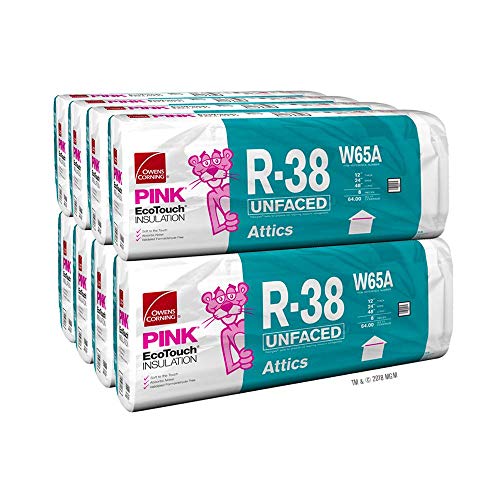
For example, at Fixr’s $2 to $3.25 per square foot, a 1,000 square foot attic works out to $2,000 to $3,250. [1] For example, the same attic using HomeAdvisor’s $1.75 to $7.50 range would be $1,750 to $7,500. [3] The overlap gives a rough sanity check, and a bid far outside it should prompt questions rather than a signature.
Now the payback side, as a hypothetical. Suppose heating and cooling cost $1,500 a year and the project trims 10% of that: $150 a year, so a $2,000 job takes about 13 years to pay back. In the same hypothetical, a 20% cut would save $300 a year and pay back in under 7 years [2].
DOE says insulation work combined with air sealing can save up to 20% on heating and cooling costs. [2] Your starting point matters most: adding a full layer to a nearly bare attic can beat that example, and topping up an attic that already has a good layer will fall short of it.
What moves the price
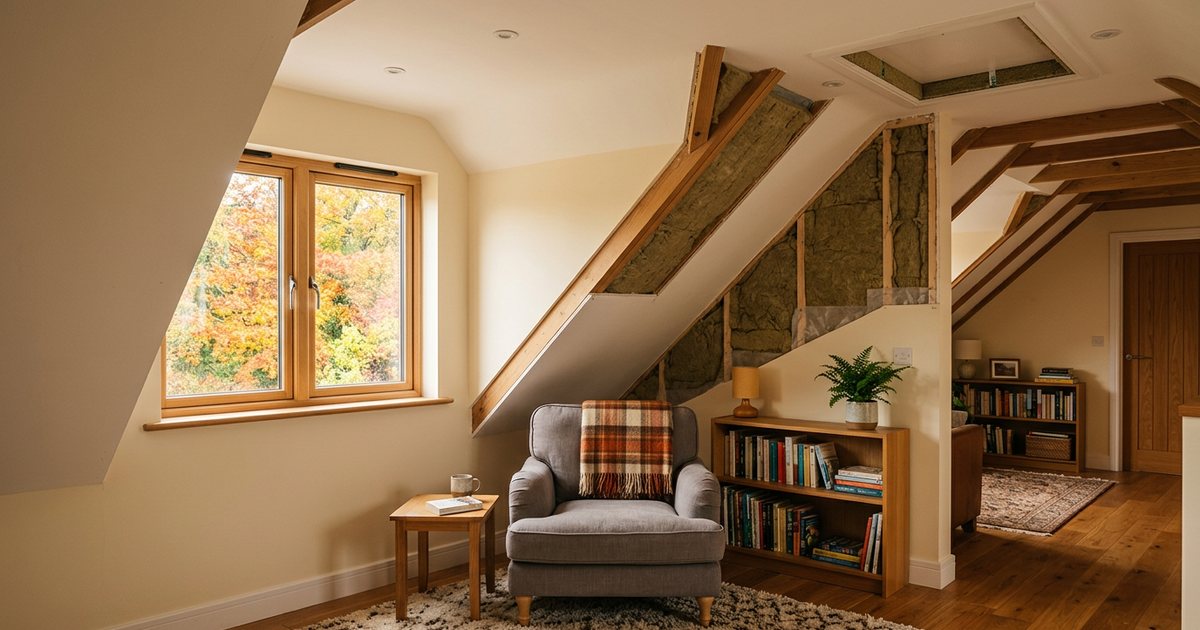
Six factors account for most of the difference between a low and a high quote.
- Target R-value and depth. More R means more material and more labor. DOE’s recommended levels differ by climate zone, so a cold-climate attic needs more than a mild one. [4]
- Air sealing. A contractor who seals leaks first adds labor, but ENERGY STAR advises calling another contractor if one will not do it. [5] This is the part of the bill that most reliably pays off.
- Baffles. Every estimate should include baffles so soffit vents stay clear. [6] A quote with none is a quote that skipped a step.
- Access and obstacles. A small hatch, low rafters, ductwork and wiring slow the crew and raise the price.
- Removal of old material. It is usually not necessary to remove existing insulation. [6] Removal becomes a line item only when it is wet, moldy or contaminated.
- Hazards. Vermiculite may contain asbestos, so testing and possible specialist handling come before any price discussion. [7]
DIY savings and where they stop
Doing it yourself saves labor, and the rental figures show where the money goes. HomeAdvisor reports a blower machine daily rental fee, and says professionals charge between $40 and $70 per hour. [3] Some manufacturers loan the machine free with an insulation purchase, which is worth asking about at the store.
The savings shrink if the job goes wrong. HomeAdvisor notes that improper use can lead to uneven insulation or equipment damage. [3] ENERGY STAR calls attic insulation generally a moderately difficult DIY project, so it is realistic for an open attic and a patient homeowner. [7] Spray foam is different: Fixr says trying to save on a DIY insulation job is not possible with spray foam. [8]
How to compare quotes
Ask each bidder to write the quote the same way so you can compare it line by line.
- Material and the final R-value, not just inches.
- Square footage covered and how much air sealing is included.
- Baffles, hatch insulation and recessed light treatment.
- Who removes old material, if any, and who tests any vermiculite.
- A written statement of what was installed and the new R-value, which ENERGY STAR says the contractor is required to provide. [5]
Cheap prep that keeps the bill down
Some of the best cost control happens before the crew arrives. Clear stored boxes away from the hatch and the work area, find and flag any recessed lights, and note where wiring runs, so the installer is not billing time to discover them. If you already know a few leaks, such as the hatch or a plumbing stack, say so at the estimate. Building America guidance is to seal cracks, seams and holes with caulk or spray foam sealants before insulation goes in, and a homeowner can handle small gaps like these. [9]
Schedule may matter too: if contractors in your area are busiest when the weather turns extreme, a mild-weather booking may give you more room to negotiate. Whatever the season, resist the quote that is far below the others: a low price can mean a thin layer, no baffles or no air sealing, and those omissions can cost more in comfort and bills than the savings on the invoice.
Rebates and incentives
Do not budget for the federal energy efficiency tax credit. It ended for property placed in service after 2025, even though some older pages still describe it. [10] Utility rebates and state programs are the places to look now, and income-qualified households can ask about the Weatherization Assistance Program. Check any rebate’s rules before you sign a contract, because some require pre-approval or a specific R-value.
FAQ
How much does it cost to insulate a 1,000 square foot attic?
For example, using Fixr’s marketplace range of $2 to $3.25 per square foot, the math for 1,000 square feet gives $2,000 to $3,250. [1]
For example, HomeAdvisor’s wider blown-in range of $1.75 to $7.50 per square foot gives $1,750 to $7,500. [3]
Is blown-in cheaper than batts?
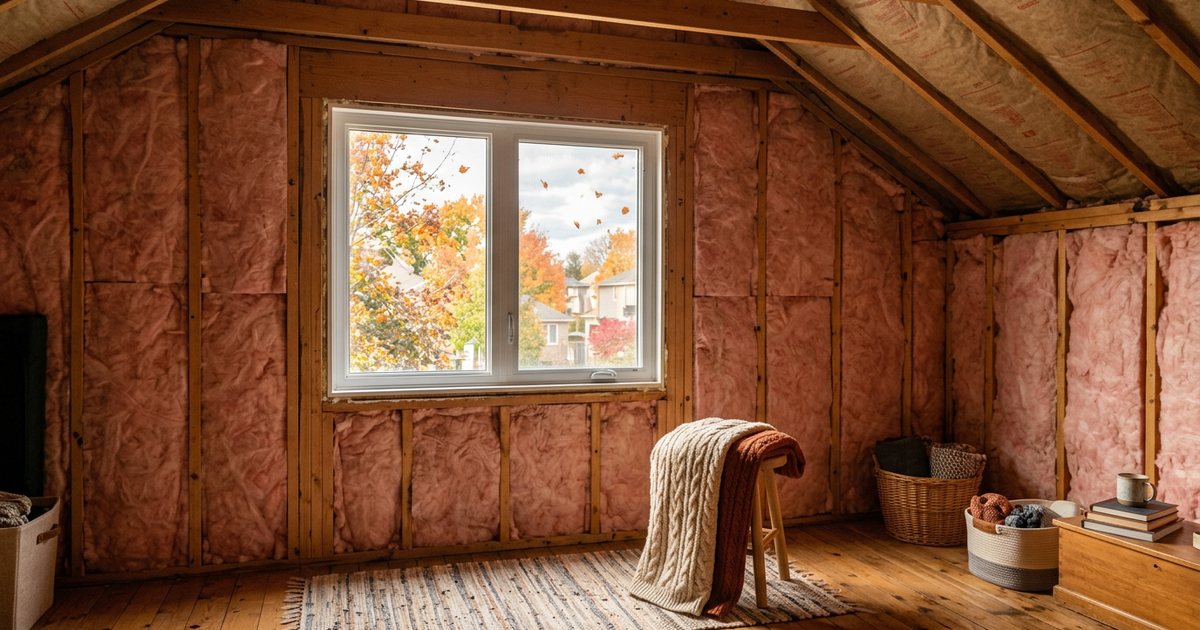
The 2010 DOE table lists batts at R-13 at $0.20 to $0.40 per square foot and loose fill at R-30 at $0.45 to $1.35, in 2010 dollars, but those are different R-values, so the answer depends on the R-value you need and who does the work. [2] Compare quotes for the same final R-value.
Does insulation pay for itself?
It can, but the timing depends on your starting level and your energy prices. ENERGY STAR says sealing and insulating can save up to 10% on annual energy bills, so a leaky, thinly insulated attic has the most to gain. [6]
Is there still a federal credit for attic insulation?
No. The federal credit ended for property placed in service after 2025. [10] Look at utility rebates, state programs and weatherization assistance instead.
Prices here come from contractor marketplaces and a dated 2010 government table, so they are ranges, not quotes for your home. Have vermiculite tested before any work, do not insulate over knob-and-tube wiring or cover non-IC recessed lights, and hire licensed professionals for spray foam and electrical concerns.
Sources
- Attic Insulation Cost (updated Sept 2022). Fixr.com (contractor cost marketplace), accessed 2026-10-12
- Guide to Home Insulation (DOE/EE-0340, October 2010). U.S. Department of Energy (EERE), accessed 2026-10-12
- Cost to Install Blown-In Insulation (2025). HomeAdvisor (contractor marketplace), accessed 2026-10-12
- Tips on Saving Money and Energy in Your Home (Energy Saver Guide, 2022). U.S. Department of Energy (EERE), accessed 2026-10-12
- Well-Insulated and Sealed Attic (ENERGY STAR Home Upgrade). U.S. EPA ENERGY STAR, accessed 2026-10-12
- How to Hire an Attic Insulation Contractor. U.S. EPA ENERGY STAR, accessed 2026-10-12
- Attic Insulation Project. U.S. EPA ENERGY STAR, accessed 2026-10-12
- Spray Foam Insulation Cost (updated Jan 31, 2025). Fixr.com (contractor cost marketplace), accessed 2026-10-12
- Batt Insulation for Existing Vented Attics (Building America Solution Center). U.S. DOE Building America Solution Center (PNNL), accessed 2026-10-12
- FAQs for modification of sections 25C, 25D, 25E, 30C, 30D, 45L, 45W and 179D under Public Law 119-21 (OBBB), FS-2025-05. Internal Revenue Service, accessed 2026-10-12
Savings, costs and rebate figures are estimates from the dated sources cited on each page; your results depend on your home, climate and utility rates, and incentive programs change often. Gas, venting and electrical work belongs with a licensed professional. This is general information, not financial, tax or legal advice. As an Amazon Associate we earn from qualifying purchases.