Low-E glass is ordinary glass with a microscopically thin metallic coating that reduces how much heat passes through. It helps in both directions: it slows heat loss in winter and, depending on the coating, cuts solar heat gain in summer. This guide explains what the coating does, how to match it to your climate, and where it is the cheapest upgrade you can make.
The most useful fact for a homeowner is that you do not have to replace a window to get low-e. DOE says a low-e storm window installed over a low-performing window can reduce heating and cooling costs by 10% to 35%. [1] That route often costs far less than new windows.
- Low-e is a thin metallic coating that cuts radiant heat transfer. [2]
- Match SHGC to your climate; the same coating is not right everywhere.
- A low-e storm over a low-performing window can cut heating and cooling costs by 10% to 35%. [1]
- Choosing low-e over clear glass in a storm adds only a small premium. [3]
- Coatings do not fix leaks or rot.
What low-e actually means
Low-e is short for low emissivity. Low-e coatings are transparent metallic layers, thinner than human hair, applied to the surfaces of glass. [2] Low emissivity means the glass gives off and passes less radiant heat, which slows heat flow through the window.
The coating sits on a glass surface; which surface depends on the product and the coating’s job. Gas fills between the panes, such as argon, add to the effect: the gas boosts efficiency in cold or hot climates. [2] ENERGY STAR windows combine these with better frames and spacers. [4]
Not all low-e coatings are the same
Manufacturers tune coatings for different jobs. Some admit more solar heat, which suits cold climates with heating-dominated bills. Others block more solar heat, which suits hot climates. The label number that tells you which you are getting is the solar heat gain coefficient, SHGC. It ranges from 0 to 1, and lower values let in less solar heat. [4]
That is why ENERGY STAR sets different SHGC rules by zone. In the Northern zone the spec calls for an SHGC at or above 0.17, while South-Central and Southern zones call for 0.23 or lower. [5] A coating that suits a hot-dry city can be wrong for a cold-winter one, so do not buy low-e glass as a single product category; buy the SHGC and U-factor values that match your zone.
- Cold climate, heating-dominated: prioritize a low U-factor and allow some solar gain.
- Hot climate, cooling-dominated: prioritize a low SHGC.
- Mixed climate: balance both and read the NFRC label for the whole unit.
Reading the numbers on a low-e window
On the NFRC label, U-factor shows how well the whole window insulates; for windows it generally ranges from 0.20 to 1.20, and lower is better. [4] DOE advises using whole-unit values, not center-of-glass values. [6] A low-e coating improves the glass itself, but the whole-unit figure also includes the frame, so it is the one to compare.
Visible transmittance, which generally ranges from 0.20 to 0.80, tells you how much daylight gets through. [7] Some coatings can lower it, so look at samples in the room where the window will go.
Low-e storm windows: the cost-effective way to get the coating
A low-e storm window adds a second glazing layer and a coating to the window you already own.
DOE says low-e exterior or interior storm windows can save 10% to 30% on heating and cooling costs, depending on the window already in place. [6] ENERGY STAR says certified low-e storms can save about $350 per year (about 10%) over single-pane clear glass with no storms, as a national average. [8]
The extra cost of choosing low-e over clear glass is small. The PNNL storm window playbook puts the premium at a small amount per window. [3] A separate PNNL database reports that low-e over clear glass pays back in 2 to 5 years in all climate zones and over all window types. [9]
Metal-framed storms need thermal breaks. ENERGY STAR calls these small non-metal separators very important. [8]
When low-e glass is not the answer
If your windows are rotted, the frames are failing, or the sealed unit has lost its seal, a coating on a storm does not fix the underlying problem. ENERGY STAR notes storms work best over working primary windows in good condition. [8]
Orientation matters as well. A window that already faces north and gets little sun may gain more from a low U-factor, while a west-facing window in a hot zone may need a low SHGC first. If you are replacing windows anyway, ask for the whole-unit SHGC and U-factor for each elevation rather than one spec for the whole house.
Also remember what the coating cannot do. It does not stop air leaks around the frame. Air sealing around trim, using caulk for gaps a quarter inch or less and non-expanding foam made for windows and doors for larger gaps, is a separate step. [10]
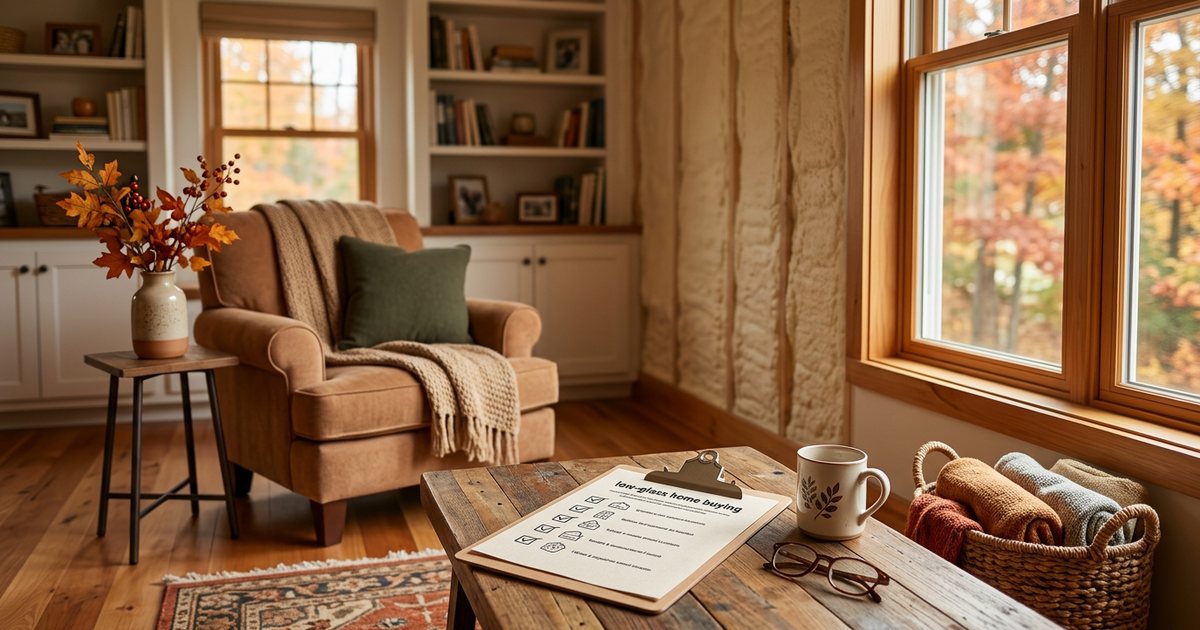
A short buying checklist
Low-e can also affect comfort. Glass with a good coating may feel less cold on the inside surface in winter, and in summer a low-SHGC coating lets in less solar heat. This guide has no sourced figure for comfort gains, so weigh them alongside the energy numbers rather than expecting them in a savings estimate.
First, confirm your climate zone and look up the ENERGY STAR limits for it. Second, ask for NFRC whole-unit U-factor and SHGC in writing for every model quoted. Third, if the frames are sound, price a low-e storm over each window as the alternative. Fourth, ask the installer to confirm the coating faces the right surface; for storm windows the manufacturer’s instructions govern.
Fifth, keep the NFRC label or the spec sheet for each window so you can show it to a future buyer or to a utility that asks for ratings when you apply for a rebate.
Finally, keep perspective on scale. Glass coatings are one input among several: insulation, air sealing, and ductwork often return more per dollar, so use low-e as a finishing step on a house that already has the big items handled.
FAQ
Does low-e glass keep heat in during winter?
Yes, it reduces heat loss through the glass. DOE says low-e storms over low-performing windows can reduce heating and cooling costs by 10% to 35%. [1]
Does low-e help in summer?
It can, depending on the coating’s SHGC. Lower SHGC values let in less solar heat. [4]
Can I add low-e to windows I already have?
Yes, with a low-e storm window installed over or inside the existing window. DOE lists exterior and interior options. [6]
Is low-e glass worth the extra cost?
In a storm window the premium over clear glass is small per window, per the PNNL playbook. [3] In replacement windows, compare the label numbers and price difference.
Why do my low-e windows look slightly tinted?
Coatings can reduce visible transmittance, which generally ranges from 0.20 to 0.80. [7] Ask for samples and the VT rating before buying.
If your house was built before 1978, window work can disturb lead paint, so use lead-safe practices. [4] Installing storms or new windows into an already tight house can also reduce natural air exchange, so make sure bath and kitchen exhaust fans keep working, and have a licensed professional check any gas or other combustion appliance venting if you are unsure.
Sources
- EERE Success Story: Performance Validation of Low-e Storm Windows Paves Way for Market Acceptance. U.S. DOE EERE, accessed 2026-10-12
- Glazing, Gas Fills and Low-E Coatings (Types and Parts). Efficient Windows Collaborative, accessed 2026-10-12
- Storm Window and Insulating Panel Utility Playbook (PNNL-SA-179063, Jan 2023). DOE Storm Window and Insulating Panel Campaign / PNNL, accessed 2026-10-12
- Consumer Guide to Energy-Efficient Windows (DOE/EE-2468). U.S. Department of Energy (EERE), accessed 2026-10-12
- ENERGY STAR Program Requirements for Residential Windows, Doors, and Skylights, Version 7.0 (Final Specification). U.S. EPA ENERGY STAR, accessed 2026-10-12
- Tips on Saving Money and Energy in Your Home (Energy Saver Guide, 2022). U.S. Department of Energy (EERE), accessed 2026-10-12
- High-Performance (ENERGY STAR) Windows. U.S. DOE Building America Solution Center (PNNL), accessed 2026-10-12
- ENERGY STAR Certified Storm Windows. U.S. EPA ENERGY STAR, accessed 2026-10-12
- Database of Low-e Storm Window Energy Performance (PNNL-24826). Pacific Northwest National Laboratory (for U.S. DOE), accessed 2026-10-12
- Sealing Behind Window and Door Trim. U.S. EPA ENERGY STAR, accessed 2026-10-12
Savings, costs and rebate figures are estimates from the dated sources cited on each page; your results depend on your home, climate and utility rates, and incentive programs change often. Gas, venting and electrical work belongs with a licensed professional. This is general information, not financial, tax or legal advice. As an Amazon Associate we earn from qualifying purchases.
