Window replacement cost is driven by three things: how many windows you replace, which frame and glass package you pick, and how much labor your house demands. The published figures vary a lot, so this guide gives you the numbers that can be sourced, shows how to build your own estimate, and explains when the spending makes sense and when cheaper fixes win.
For a single energy-focused window, a 2019 DOE slide deck reports that most double-pane low-e sash replacements cost $400 to $600 per window or more, installed. [1] That is a per-window figure from several years ago, not a whole-house price, and odd sizes, trim repair, or lead-safe work in older homes can add to it. Read on for the pieces that move the total.
- Itemize every quote: unit, labor, trim, haul-away.
- A 2019 DOE slide deck reports double-pane low-e sash replacement at $400 to $600 per window or more installed. [1]
- Total payback for replacement can be very long (25 to 50 years, per PNNL); the efficient upgrade increment is what pays. [2]
- The federal window credit ended after 2025, so budget without it. [3]
- Seal air leaks and consider storms or shades before replacing sound windows.
What goes into a window replacement quote
A quote has four parts: the window itself, installation labor, trim and finish work, and disposal of the old unit. The window price changes with frame material, glass package, and size. Labor changes with access, wall type, and whether the opening is square.
Fixr, a cost-estimating site, reports that labor makes up about 30% of the total on average. [4] That share is a handy sanity check: if a quote shows labor far above or below a third of the total, ask why. Large bow and bay units, second-story access, and rotted framing all push labor up.
Ask every contractor to itemize per window: unit price, labor, trim, haul-away, and any permit. A single lump sum hides the numbers you need to compare bids, and it makes it impossible to see how much you would save by dropping one or two low-value windows from the job.
- Unit price by frame type and glass package.
- Labor, including any structural or rot repair found after the old window comes out.
- Interior and exterior trim, paint, and caulk.
- Removal and disposal of old units.
- Lead-safe work practices for homes built before 1978. [5]
The price that matters is the extra cost of better performance
Researchers at PNNL make a point most shopping guides skip. They note that the total payback of replacement windows, including removal and installation, can be very long (25 to 50 years), and that what matters is the incremental cost of a more efficient window. [2] Put simply, if you have to replace a window anyway because it is rotted or broken, the real question is how much extra the efficient version costs.
That reframes the budget. A failing window is a repair bill you were going to pay regardless. Choosing an ENERGY STAR model over a basic one adds a smaller increment, and that increment may pay back faster than the whole project.
Replacing perfectly serviceable windows purely for energy is the case where cost is hardest to justify.
What replacing does and does not save
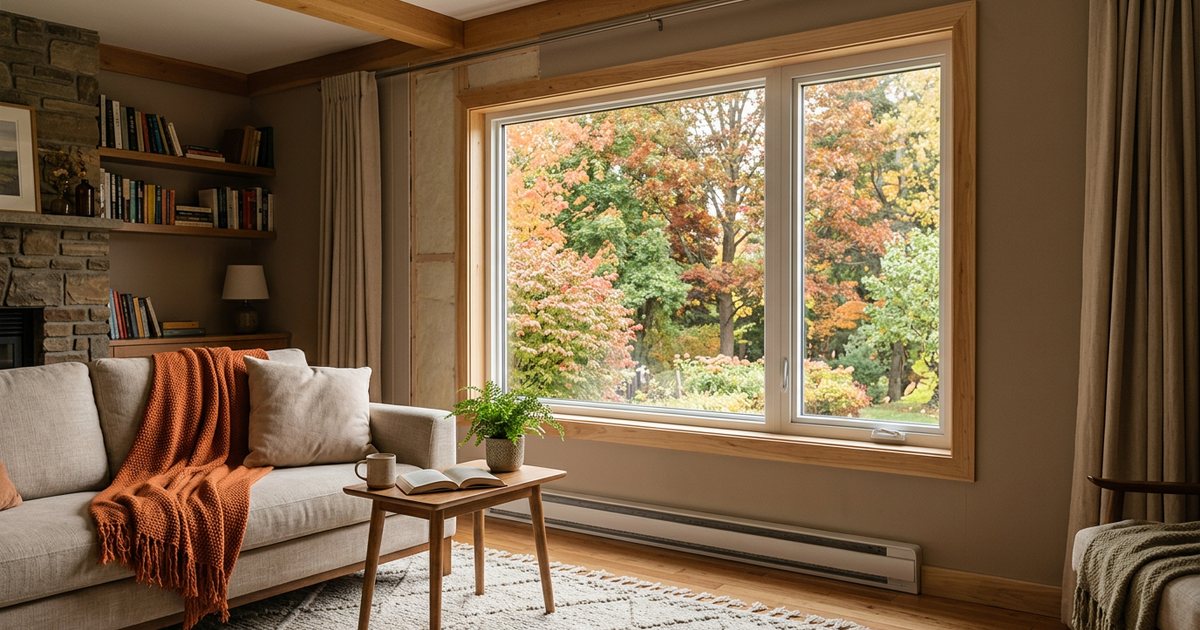
DOE says upgrading to ENERGY STAR windows can save as much as 7% to 15% or more on annual household energy bills, depending on location and the window replaced. [5] BASC gives a narrower 6% to 13%. [6] DOE also cautions that new windows can mean a considerable investment with a potentially extended payback period. [5]
The National Park Service is blunter, saying studies show window replacement does not pay for itself in energy savings in a reasonable length of time, and pointing out that DOE found air loss through windows to be only about 10% of the total in most buildings. [7] Homeowners do get some money back at resale: on average they recoup about 78% of the cost when the home is sold. [5]
For example, if a project costs $10,000 and you recoup the average share at sale, you get roughly $7,800 back at that point. That is a resale effect, separate from your utility bills, and it varies by market. [5]
The federal credit is gone
Older articles still advertise a federal tax credit for windows. The federal Energy Efficient Home Improvement Credit ended: IRS guidance says it covered improvements made through December 31, 2025. [3] Do not count on it when budgeting.
Money that may still exist depends on where you live: utility rebates, state programs, and the Weatherization Assistance Program for income-qualified households. Check with your utility and state energy office before signing, and ask the contractor whether any local rebate requires specific ENERGY STAR or NFRC ratings.
Cheaper routes that often come first
DOE advises insulating and air sealing before you replace windows. [5] Sealing uncontrolled air leaks can save 10% to 20% on heating and cooling bills, per DOE. [8] Those jobs are usually cheaper than window work and often deliver more per dollar.
If your windows are drafty but the frames are sound, storm windows are the main alternative. DOE reports that adding storm windows costs much less than replacement. [1] A DOE success story quotes Tom Culp saying low-e storms cost about a quarter of full window replacement and bring similar energy savings. [9]
Window coverings are cheaper still. The same 2019 DOE slides list non-motorized insulated cellular shades as well. [1] None of these touch a rotted sill or a failed seal, so they are not a substitute when the window itself is failing.

A step-by-step way to decide
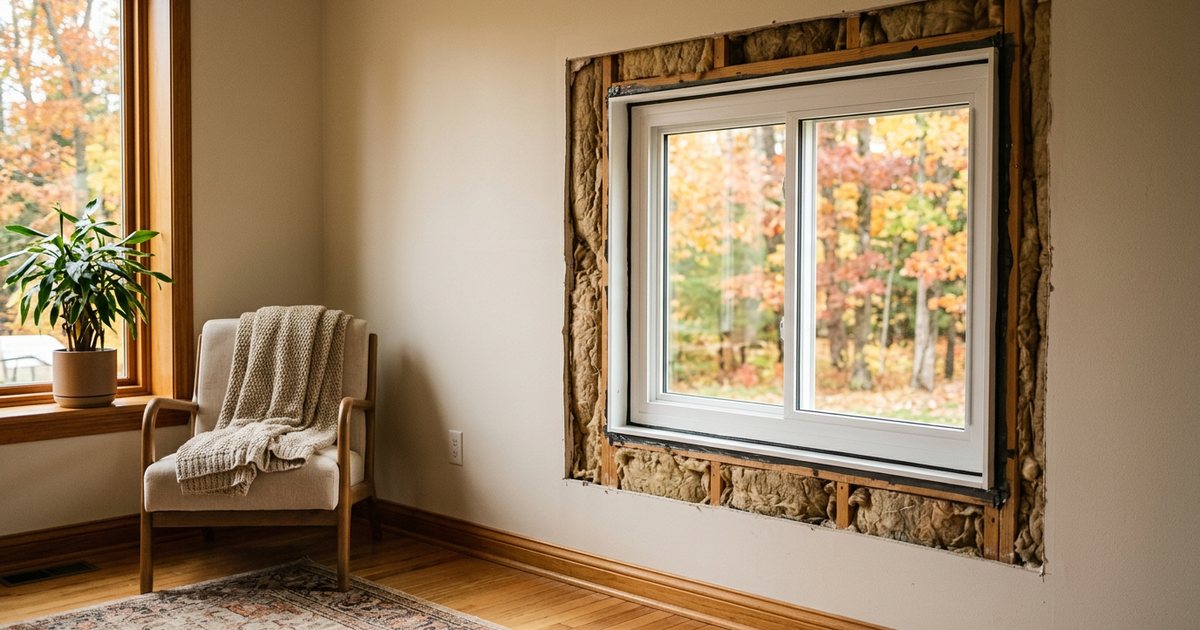
Start by sorting windows into three groups: failing (rot, broken seals, will not open or close), drafty but sound, and fine. Only the first group is a replace-now candidate. Insulated glass seals are unlikely to last beyond about 25 years, and after seal failure the sash usually needs replacement. [7] A window that has reached that age is a better replacement candidate than one that still performs.
Also check the cause of any problem before paying for a new unit.
Condensation, drafts, and sticking sashes sometimes come from worn weatherstripping, failed glazing putty, or a loose sash cord, all of which are cheaper to fix than the window. A contractor who only sells replacements will not point that out, so consider a second opinion from someone who also does repair work. Keep photos of each window’s condition, label values, and age in one folder; that record makes bids easier to compare and gives you proof of condition if you sell.
Next, get at least three itemized quotes, with NFRC label values written on each. Compare quotes on the increment between a basic and an efficient model, not on the headline total. Then price the alternative for the drafty-but-sound group: weatherstripping, storms, or shades. Finally, decide the order: air seal, then cheap attachments, then replace the windows that actually need it.
FAQ
How much does it cost to replace one window?
A 2019 DOE slide deck reports most double-pane low-e sash replacements at $400 to $600 per window or more, installed. [1] Large bay or bow units, difficult access, and repairs to rotted framing push the number higher, so get itemized quotes.
How much of the price is labor?
Fixr reports that labor averages about 30% of the total. [4] Use it as a rough check on a quote rather than a rule.
Can I still claim a federal credit for windows?
No. The federal credit covered improvements made through December 31, 2025 and has ended. [3] Look at utility and state programs instead.
Will new windows pay for themselves?
Often slowly. The National Park Service says replacement does not pay for itself in a reasonable time, and DOE warns of a potentially extended payback. [7] [5]
Should I replace all windows at once?
Not necessarily. Replace the failing ones first and handle the rest with sealing, storms, or shades, then revisit as units reach the end of their life.
Homes built before 1978 likely contain lead paint, a serious hazard when old windows are removed or sanded. [5] Use lead-safe practices or a certified renovator, and have framing, flashing, and water management checked by a qualified installer.
Sources
- Window Treatments: The Undervalued, Highly Efficient Window Attachments (Better Buildings Residential Network, Nov 2019). U.S. Department of Energy (Better Buildings Residential Network), accessed 2026-10-12
- Database of Low-e Storm Window Energy Performance (PNNL-24826). Pacific Northwest National Laboratory (for U.S. DOE), accessed 2026-10-12
- Energy Efficient Home Improvement Credit. Internal Revenue Service, accessed 2026-10-12
- Window Replacement Cost (updated Jan 21, 2026). Fixr.com (contractor cost marketplace), accessed 2026-10-12
- Consumer Guide to Energy-Efficient Windows (DOE/EE-2468). U.S. Department of Energy (EERE), accessed 2026-10-12
- High-Performance (ENERGY STAR) Windows. U.S. DOE Building America Solution Center (PNNL), accessed 2026-10-12
- Preservation Brief 3: Improving Energy Efficiency in Historic Buildings. National Park Service, Technical Preservation Services, accessed 2026-10-12
- Tips on Saving Money and Energy in Your Home (Energy Saver Guide, 2022). U.S. Department of Energy (EERE), accessed 2026-10-12
- EERE Success Story: Performance Validation of Low-e Storm Windows Paves Way for Market Acceptance. U.S. DOE EERE, accessed 2026-10-12
Savings, costs and rebate figures are estimates from the dated sources cited on each page; your results depend on your home, climate and utility rates, and incentive programs change often. Gas, venting and electrical work belongs with a licensed professional. This is general information, not financial, tax or legal advice. As an Amazon Associate we earn from qualifying purchases.